-------------------------------------------------------------------------------------------------
Inauguration of Summer Higher Buddhist Council at Spituk Monastery
July 30th 2015
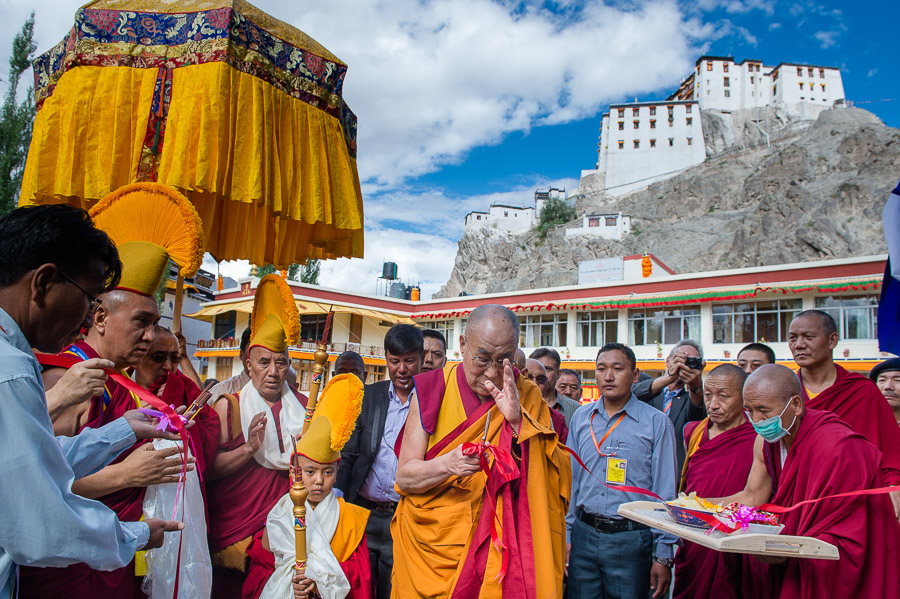
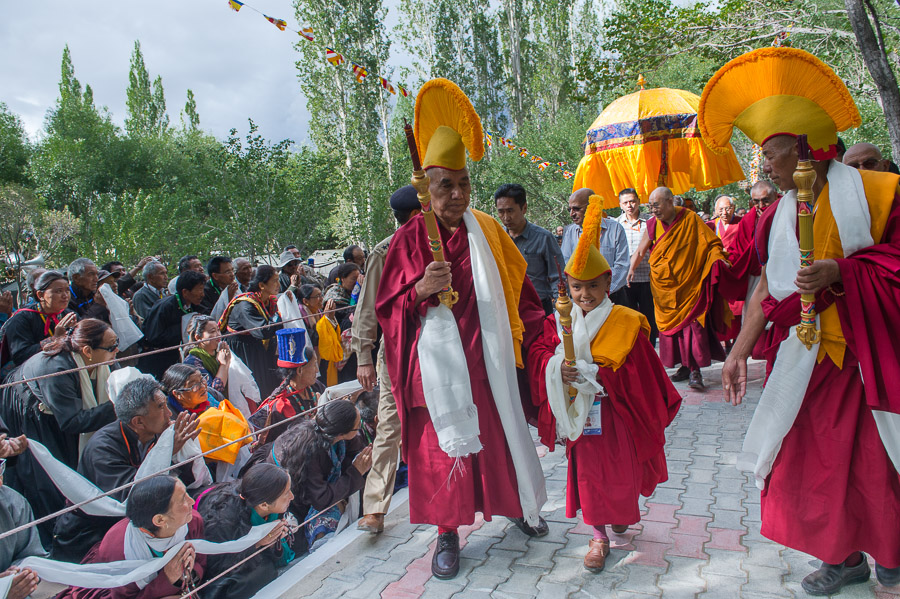
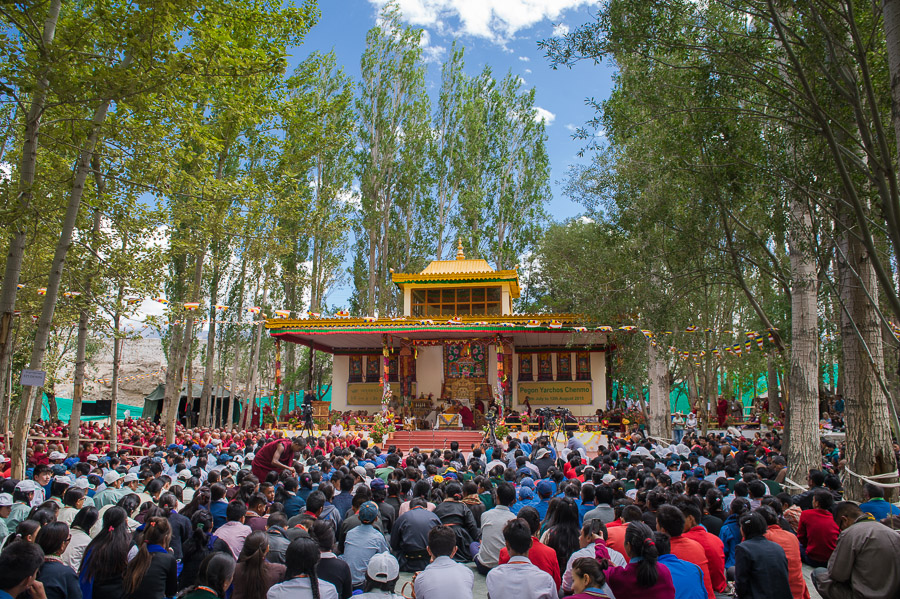
Leh, Ladakh, J&K, India, 29 July 2015 - The Pegon Phagspa Nastan Bakula Institute Hostel stands at the foot of the rocky outcrop crowned by Spituk Monastery. A short walk away amidst tall poplars stands a pavilion and a ground prepared for the inauguration this morning of Summer Higher Buddhist Council.
 |
| With Spituk Monastery in the backgroud, His Holiness the Dalai Lama inaugurates the Summer Higher Buddhist Council at Pegon Phagspa Nastan Bakula Institute in Leh, Ladakh, J&K, India on July 29, 2015. Photo/Tenzin Choejor/OHHDL |
Once His Holiness the Dalai Lama had
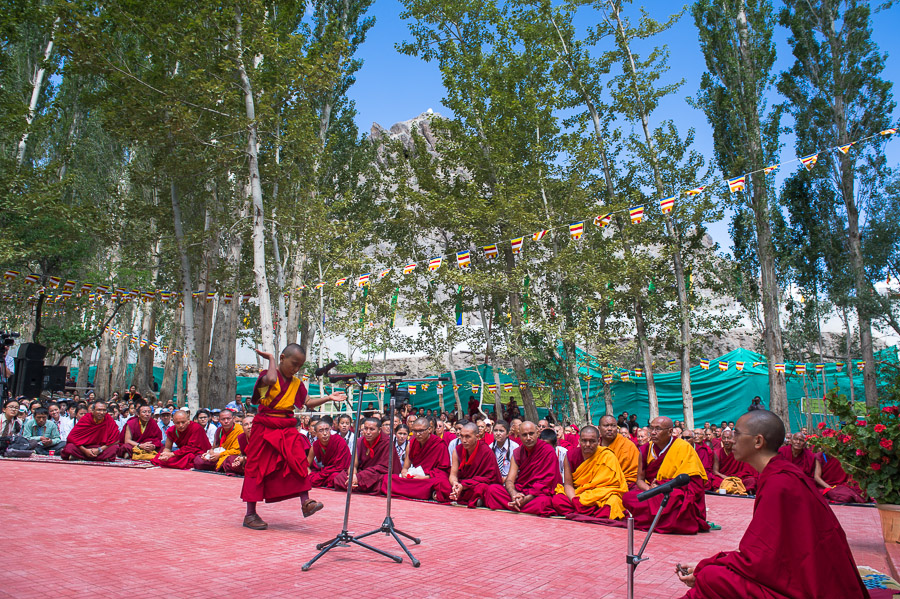
taken his seat, the young reincarnation of Bakula Rinpoche, the
chief Lama of Spituk Monastery, offered him the mandala and three
representations of the enlightened body, speech and
mind.
Geshe Konchok Wangdu, Director of the
Institute of Buddhist Dialectics in Ladakh introduced the occasion.
He said that this summer debate session was dedicated to raising
the level of religious education and promoting inter-religious
harmony in Ladakh. The focus of the debates is the Perfection of
Wisdom teachings because His Holiness stresses the need to
understand what Buddhism means, how it is relevant today and how to
put it into practice. He acknowledged that it is due to His
Holiness's guidance that Buddhist understanding in the region has
greatly improved in recent years.
Geshe Thubten Rabgyey, who is Ling
Rinpoche's tutor, welcomed His Holiness, Ganden Tri Rinpoche,
officials of the Ladakh administration, monks, scholars and all
other guests. He noted that the Summer Debates held last year at
Likir Monastery had set a fine example to be
followed.
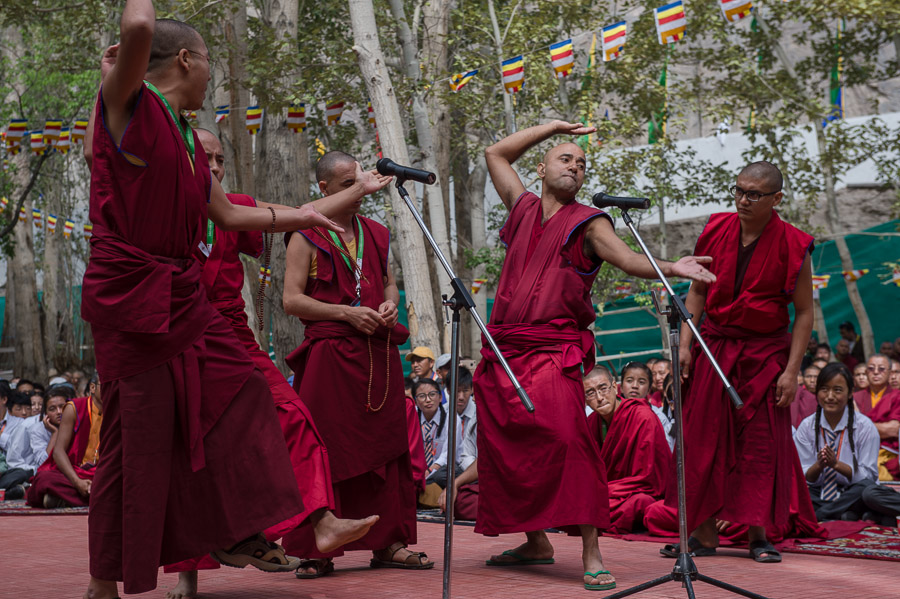
Monks of Spituk Monastery
opened the debates with an energetic discussion of whether beings
exist inherently or not. They were followed by the young
reincarnation of Bakula Rinpoche, who is still in the early stages
of dialectical training, who, with grace and quiet confidence dealt
with questions from the 'collected topics'. His performance was
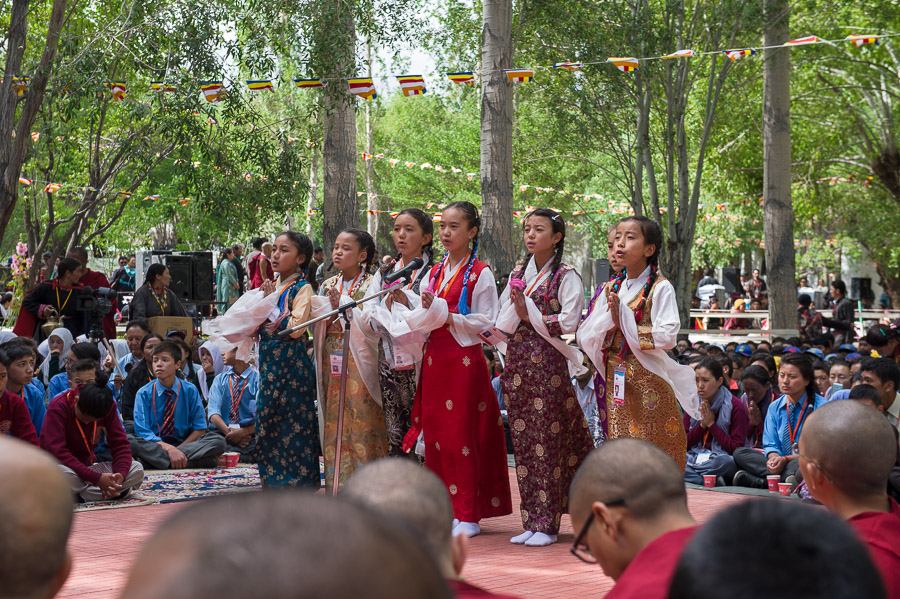
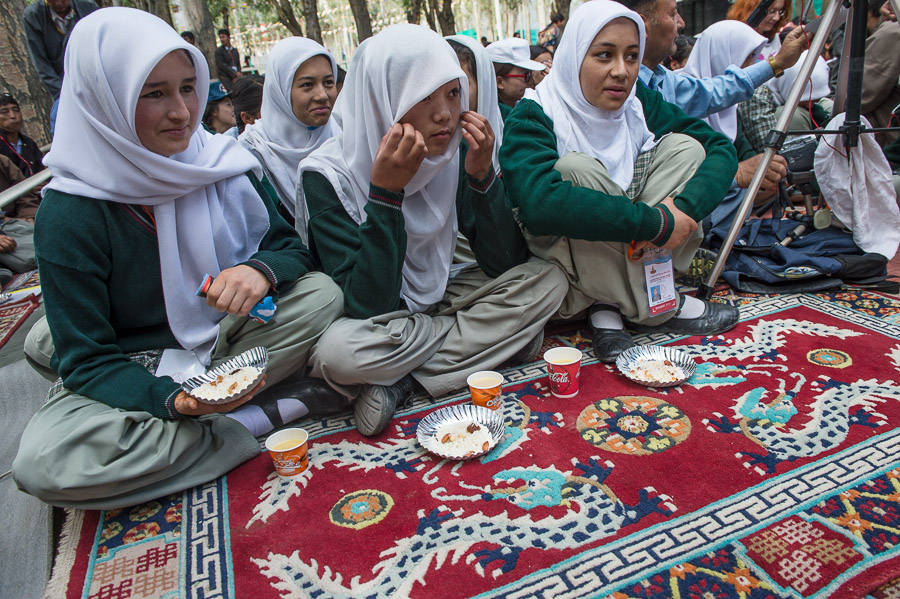
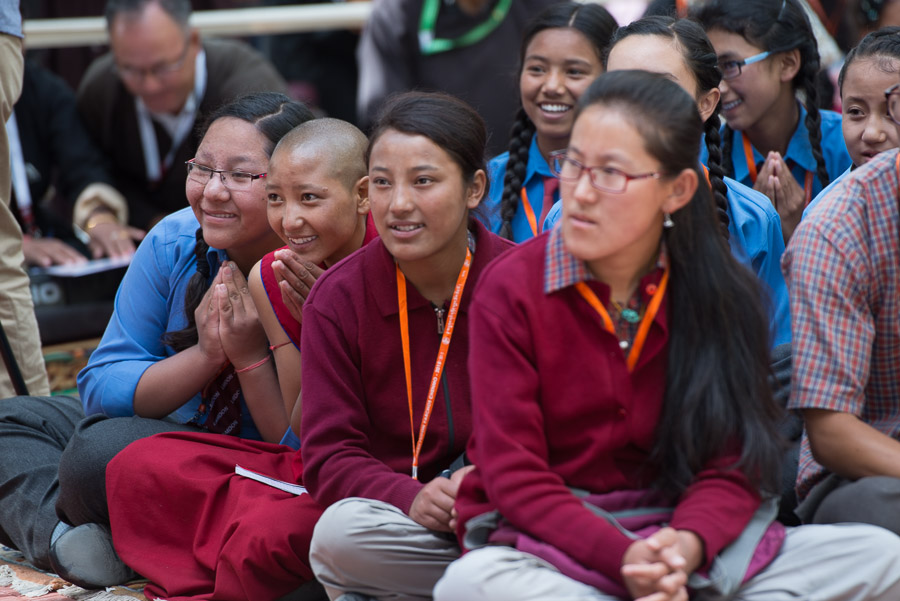
greeted with warm applause. Several sets of local school children,
girls as well as boys, then debated fundamental topics like the
Four Noble Truths, the differences between the aspirational and
engaging awakening minds and the methods for developing
them.
J&K Minister of State Tsering Dorjee addressed the gathering noting that it was under His Holiness's guidance that local monasteries have successfully introduced the study of Buddhist philosophy and debate. He commended these Summer Debates as a custom worth keeping alive. Chief Executive of the Ladakh Autonomous Hill Development Council (LAHDC) Rigzin Spalbar remarked that some Ladakhi youths are confused about the value of their local culture and traditions. In the past, he said, parents used to teach these things, but nowadays, young people tend to pay their parents less attention. This is why it is especially valuable when His Holiness helps them understand the relevance of Buddhist teaching in the present day.
Ganden Tri Rinpoche added that the old ways are changing and people lose interest in established traditions. However, he said, due to His Holiness's efforts, interest in and understanding of Buddhism is being restored. It's a tradition founded on reason not mere preconceptions and is the only spiritual tradition to propound the key concept of dependent arising.
His Holiness began his
address by greeting all present. He too noted the changes that have
taken place in Ladakh, not all of them positive. He mentioned his
concern at hearing that in a place where it used almost never to
occur, there are increased reports of suicide in Ladakh. He sees
this as a reflection of a wider moral crisis afflicting the world.
Many of the problems faced by the 7 billion human beings alive
today are man-made.
"We may pray for solutions to these problems,î he laughed, ìbut real solutions will only be found when we take action ourselves. The older people here belong to the 20th century, a time thatís past, which was an era of extraordinary bloodshed. How the 21st century turns out depends on those of you who are still young. It can be an era of peace and happiness if you work for that, but if you are angry and greedy it will turn into another period of conflict and suffering. When the British ruled India one positive thing they stressed was the value of education. We need to keep that up today, but also combine it with traditional inner values.
"To make the 21st century an era of peace we need to learn how to develop peace of mind and how to tackle our disturbing emotions. When we are physically ill we diagnose the ailment and find a remedy. We need a similar approach to create a healthy mind. Taking drugs or getting drunk will not put a stop to our disturbing emotions. We need to apply a kind of emotional hygiene based on a clearer understanding of reality and the workings of the mind.
"I make a distinction between Buddhist science, philosophy and religion. People who are not Buddhist needn't pay attention to the religious aspects of the tradition, but there is no reason why the science and philosophy shouldn't be openly accessible to whoever wishes to benefit from them. These days, eminent scientists are taking interest in the profound explanations of reality and the workings of the mind to be found in these sources."
With regard to traditional
modes of study, His Holiness explained that the past masters of
India and Tibet took an approach in writing and debate in which
they refuted others' views, asserted their own and rebutted any
consequent criticism. He remarked that this approach of Nagarjuna
and his disciples, followed by Dharmakirti, Dignaga and
Shantarakshita was conveyed to Tibet and rigorously preserved
there. Scientists have been impressed and enquired whether such an
approach could be applied to other topics. His Holiness mentioned
that students in Tibetan schools and monasteries are now debating
questions of science and maths. He added that traditionally it's
acceptable to cite authentic quotations to support your point, but
the quotation has to be supported by logic, not the other way
round.
"A positive sense of competitiveness can be very helpful in debate too, but only in the context of wishing that both you and your opponent are ultimately successful. There's a final story I'd like to tell you of a Lama who introduced study and debate for monastics and lay people in Kardze, Kham. There was also a Ngagpa Monastery nearby and householders would invite the Ngagpas to perform rituals for them. Soon the Ngagpas began to complain that laypeople shouldn't be taught to debate because when they came to do rituals for them they asked all sorts of questions that they couldn't answer. Nevertheless, this mode of study, starting with 'collected topics' and working step by step up to the Perfection of Wisdom, is a source of progress."
 |
| Young Bakula Rinpoche debating in front of His Holiness the Dalai Lama during the inauguration of the Summer Higher Buddhist Council at Pegon Phagspa Nastan Bakula Institute in Leh, Ladakh, J&K, India on July 29, 2015. Photo/Tenzin Choejor/OHHDL |
J&K Minister of State Tsering Dorjee addressed the gathering noting that it was under His Holiness's guidance that local monasteries have successfully introduced the study of Buddhist philosophy and debate. He commended these Summer Debates as a custom worth keeping alive. Chief Executive of the Ladakh Autonomous Hill Development Council (LAHDC) Rigzin Spalbar remarked that some Ladakhi youths are confused about the value of their local culture and traditions. In the past, he said, parents used to teach these things, but nowadays, young people tend to pay their parents less attention. This is why it is especially valuable when His Holiness helps them understand the relevance of Buddhist teaching in the present day.
Ganden Tri Rinpoche added that the old ways are changing and people lose interest in established traditions. However, he said, due to His Holiness's efforts, interest in and understanding of Buddhism is being restored. It's a tradition founded on reason not mere preconceptions and is the only spiritual tradition to propound the key concept of dependent arising.
 |
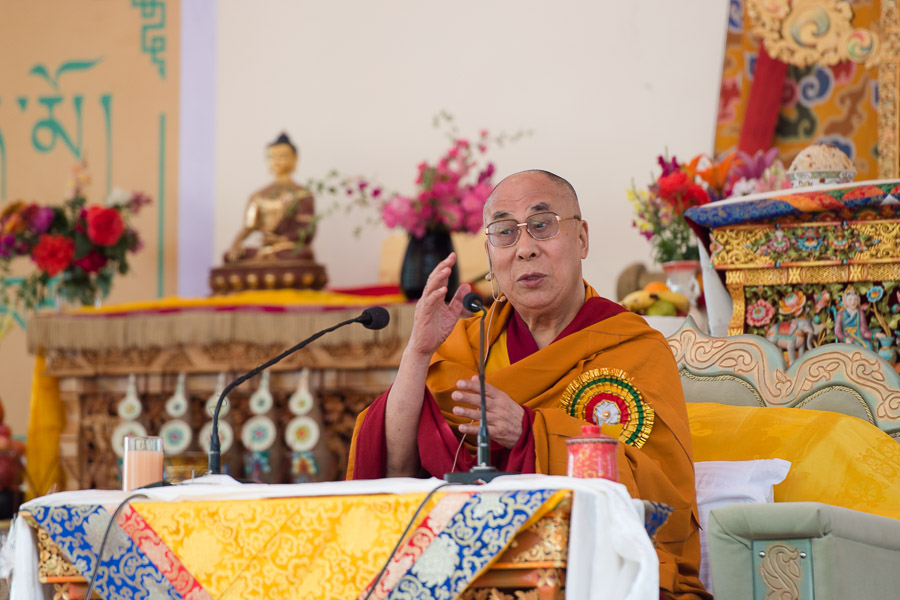
| His
Holiness the Dalai Lama speaking during the inauguration of the
Summer Higher Buddhist Council at Pegon Phagspa Nastan Bakula
Institute in Leh, Ladakh, J&K, India on July 29, 2015. Photo/Tenzin Choejor/OHHDL |
"We may pray for solutions to these problems,î he laughed, ìbut real solutions will only be found when we take action ourselves. The older people here belong to the 20th century, a time thatís past, which was an era of extraordinary bloodshed. How the 21st century turns out depends on those of you who are still young. It can be an era of peace and happiness if you work for that, but if you are angry and greedy it will turn into another period of conflict and suffering. When the British ruled India one positive thing they stressed was the value of education. We need to keep that up today, but also combine it with traditional inner values.
"To make the 21st century an era of peace we need to learn how to develop peace of mind and how to tackle our disturbing emotions. When we are physically ill we diagnose the ailment and find a remedy. We need a similar approach to create a healthy mind. Taking drugs or getting drunk will not put a stop to our disturbing emotions. We need to apply a kind of emotional hygiene based on a clearer understanding of reality and the workings of the mind.
"I make a distinction between Buddhist science, philosophy and religion. People who are not Buddhist needn't pay attention to the religious aspects of the tradition, but there is no reason why the science and philosophy shouldn't be openly accessible to whoever wishes to benefit from them. These days, eminent scientists are taking interest in the profound explanations of reality and the workings of the mind to be found in these sources."
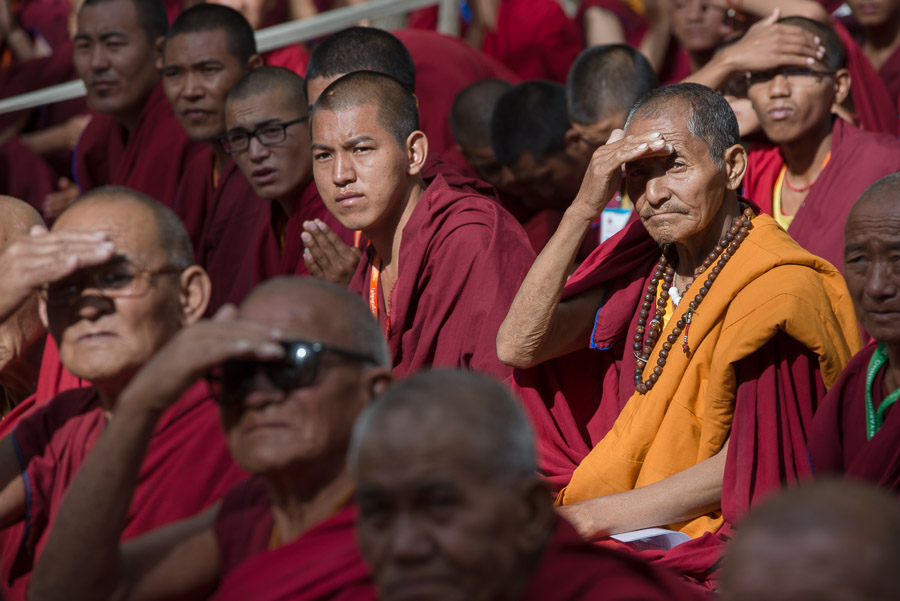
 |
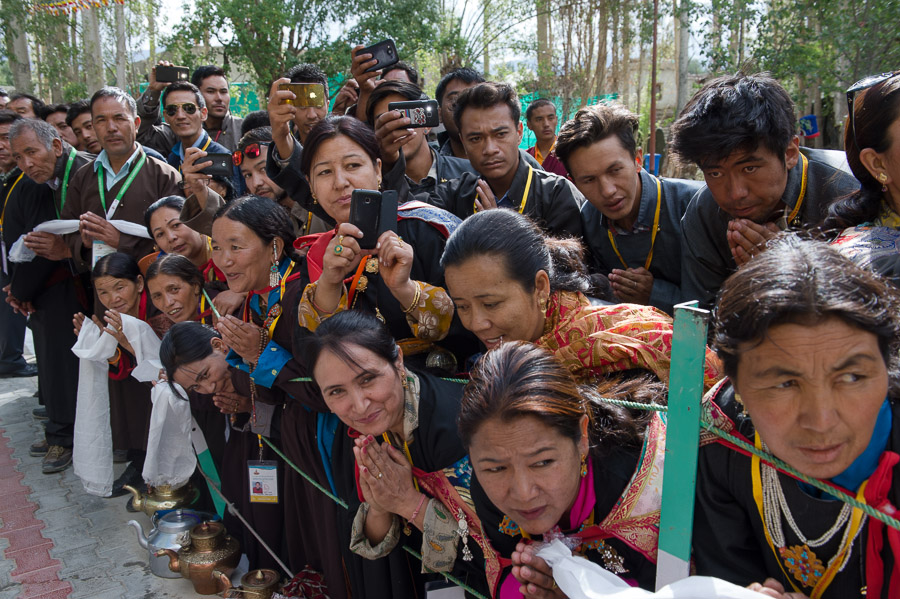
| A view of the Summer Higher Buddhist Council grounds atPegon Phagspa Nastan Bakula Institute in Leh, Ladakh, J&K, India on July 29, 2015. Photo/Tenzin Choejor/OHHDL |
"A positive sense of competitiveness can be very helpful in debate too, but only in the context of wishing that both you and your opponent are ultimately successful. There's a final story I'd like to tell you of a Lama who introduced study and debate for monastics and lay people in Kardze, Kham. There was also a Ngagpa Monastery nearby and householders would invite the Ngagpas to perform rituals for them. Soon the Ngagpas began to complain that laypeople shouldn't be taught to debate because when they came to do rituals for them they asked all sorts of questions that they couldn't answer. Nevertheless, this mode of study, starting with 'collected topics' and working step by step up to the Perfection of Wisdom, is a source of progress."